
Sustainability



Sustainability
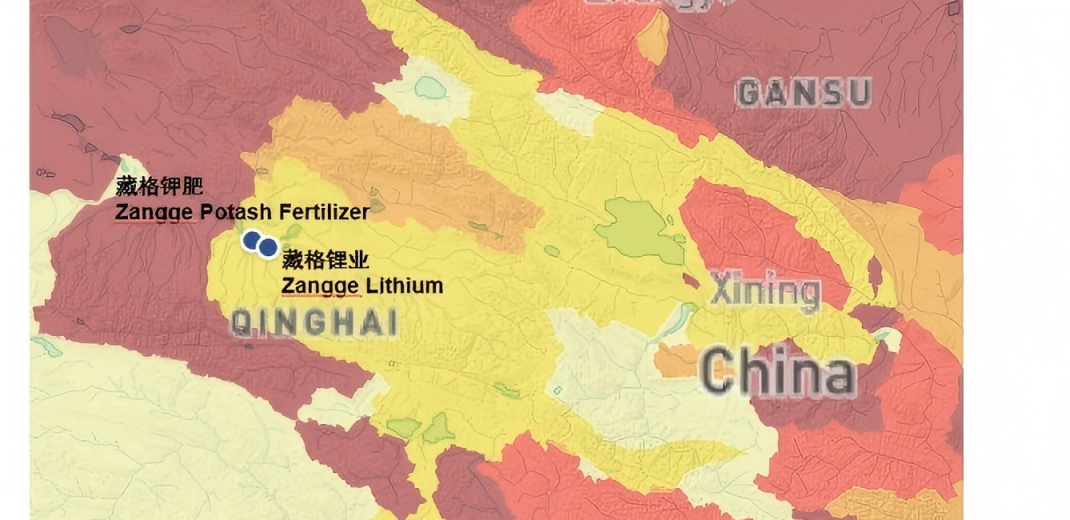
Analysis Results of WRI Water Risk Assessment Tool
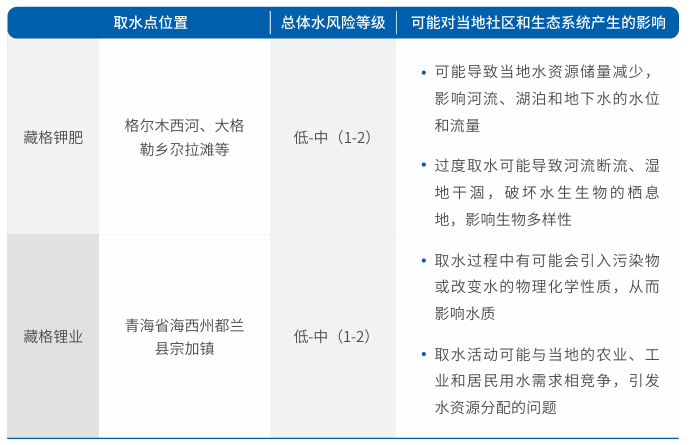
Water Risk Assessment of Zangge Mining
The company also conducted a dedicated analysis of potential risks that water extraction activities might pose to local communities and ecosystems. This assessment provides a theoretical basis for deepening water resource management practices. Key impact pathways are summarized as follows:
| Impact Type | Impact Pathway |
|---|---|
| Water Resource Use | Excessive water withdrawal may reduce local water storage, affecting river, lake, and groundwater levels and flows, putting pressure on aquatic ecosystems, agricultural irrigation, and residential water supply. |
| Water Quality | Water extraction may introduce pollutants or alter the physical-chemical properties of water, affecting drinking water sources and agricultural water use. |
| Ecological Environment | Over-extraction can cause rivers to dry up and wetlands to degrade, damaging habitats for aquatic organisms. |
| Socioeconomic | Water extraction may compete with local agricultural, industrial, and residential water demands, creating distribution challenges; construction and operation of water facilities may also impact the local economy. |
| Sustainability | Long-term excessive water use may result in unsustainable water resource utilization, threatening long-term regional development. |



China Securities Qinghai Mediation Workstation Complaint Hotline:0971-5504853
CSRC Petition Hotline:010-66219166 66210182 Qinghai CSRC Bureau Reporting Hotline:0971-8251497
© Zangge Mining Co., Ltd. All Rights Reserved. Qing ICP No. 2021000981-1
Technical Support: Zangge Technology (Xi’an) Co., Ltd. Qinghai Public Security No. 63280102000034


Official Account

Investor Relations Account

Recruitment Account
 Reporting Hotline:+86-028-89992276
 Reporting Email:jc@email.zanggekuangye.com
 Mailing Address:Audit and Supervision Office, CAG Mining Co., Ltd., 19th Floor, Building 2, No. 1199 North Section of Tianfu Avenue, Chengdu High-tech Zone, China (Sichuan) Pilot Free Trade Zone, 610041
Scan with WeChat