


2026-06-29
Zangge Potash Fertilizer Conducts 2026 Comprehensive Emergency Drill for Production Safety Accidents




To further enhance the emergency response capabilities of personnel in the Zangge Potash Fertilizer plant area for sudden fire and explosion accidents, test the scientific soundness and practical operability of emergency response plans, and strengthen coordinated response capabilities among departments and offices, the Safety and Environmental Protection Department of Zangge Potash Fertilizer led the organization of a comprehensive emergency drill for production safety accidents on June 17. An Shoujun, Executive Deputy General Manager of Zangge Potash Fertilizer; Wang Libing, Assistant General Manager and Head of the Public Utilities Department; heads of relevant departments and offices; and frontline employees participated in the drill.
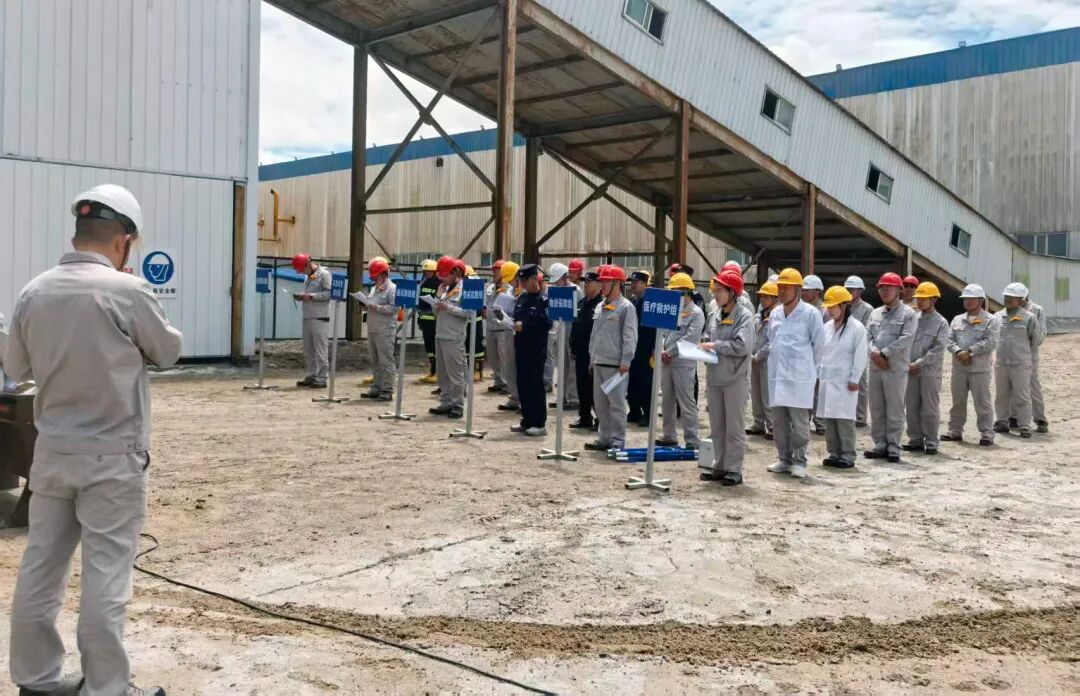
Based on the actual conditions of the potash fertilizer production plant area, the drill established six specialized emergency response teams: emergency rescue, emergency response, communications liaison, security cordon and evacuation, materials support, and medical rescue. During the drill, each team strictly followed the emergency response plan and completed the full-chain procedures, including step-by-step accident reporting, on-site zoning and cordon setup, safe personnel evacuation, emergency handling, allocation of emergency supplies, and first aid and transfer of injured personnel. The drill comprehensively tested the rapid response and joint rescue capabilities of grassroots emergency response teams.
After the drill, An Shoujun, Commander-in-Chief of the drill, provided on-site comments. He fully recognized the effectiveness of the drill, noting that it covered the full emergency response process, further standardized on-site response procedures, and clarified the emergency responsibilities of each department. At the same time, drawing on practical response requirements, An Shoujun pointed out several shortcomings. First, the drill was relatively procedural and formalistic, with insufficient realism in the on-site emergency response atmosphere. Second, the emergency rescue deployment was not sufficiently well arranged, and medical rescue resources were not adequately positioned in advance for high-risk explosion cordon areas. Third, the medical rescue team did not respond in a timely manner, and some on-site rescue operations were not sufficiently standardized. Fourth, some participants were unclear about their job responsibilities, and gaps remained in interdepartmental coordination, indicating that the overall practical emergency response capability still needs to be further improved.
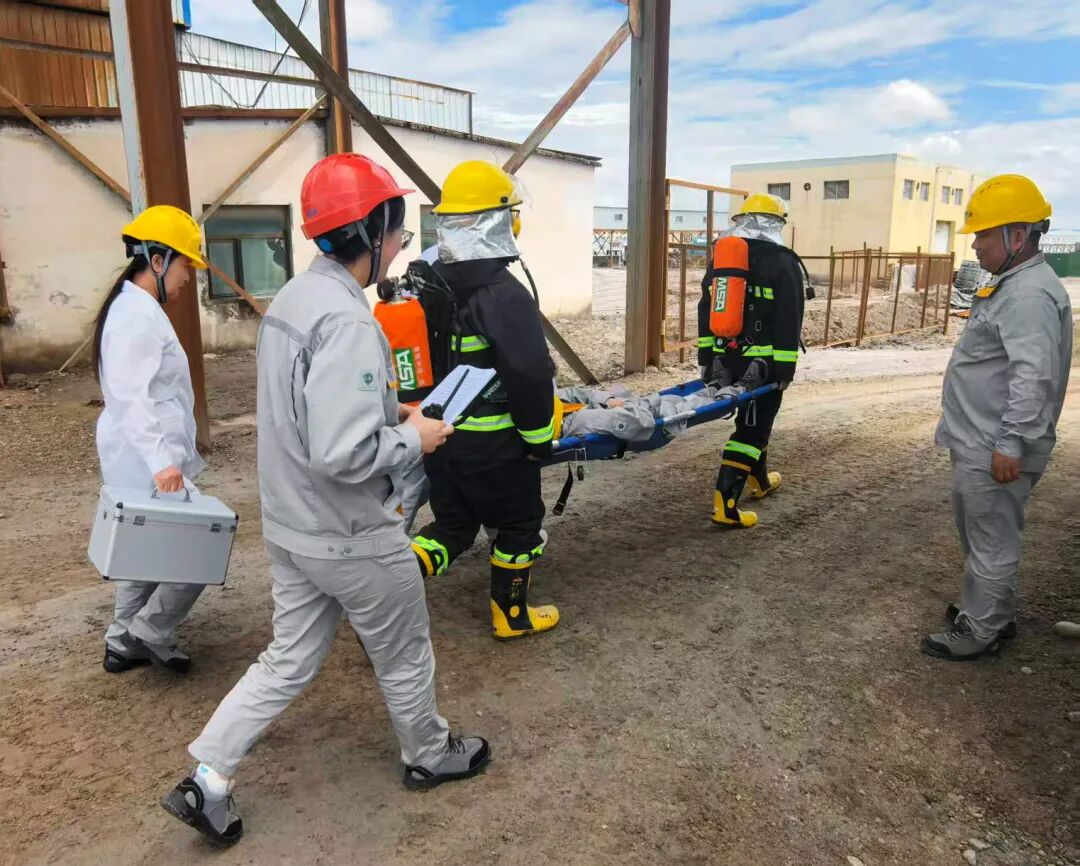
Based on the actual conditions of the potash fertilizer production plant area, the drill established six specialized emergency response teams: emergency rescue, emergency response, communications liaison, security cordon and evacuation, materials support, and medical rescue. During the drill, each team strictly followed the emergency response plan and completed the full-chain procedures, including step-by-step accident reporting, on-site zoning and cordon setup, safe personnel evacuation, emergency handling, allocation of emergency supplies, and first aid and transfer of injured personnel. The drill comprehensively tested the rapid response and joint rescue capabilities of grassroots emergency response teams.
After the drill, An Shoujun, Commander-in-Chief of the drill, provided on-site comments. He fully recognized the effectiveness of the drill, noting that it covered the full emergency response process, further standardized on-site response procedures, and clarified the emergency responsibilities of each department. At the same time, drawing on practical response requirements, An Shoujun pointed out several shortcomings. First, the drill was relatively procedural and formalistic, with insufficient realism in the on-site emergency response atmosphere. Second, the emergency rescue deployment was not sufficiently well arranged, and medical rescue resources were not adequately positioned in advance for high-risk explosion cordon areas. Third, the medical rescue team did not respond in a timely manner, and some on-site rescue operations were not sufficiently standardized. Fourth, some participants were unclear about their job responsibilities, and gaps remained in interdepartmental coordination, indicating that the overall practical emergency response capability still needs to be further improved.







 Reporting Hotline:+86-028-89992276
 Reporting Email:
 Mailing Address:Audit and Supervision Office, CAG Mining Co., Ltd., 19th Floor, Building 2, No. 1199 North Section of Tianfu Avenue, Chengdu High-tech Zone, China (Sichuan) Pilot Free Trade Zone, 610041